Monday, April 28, 2014

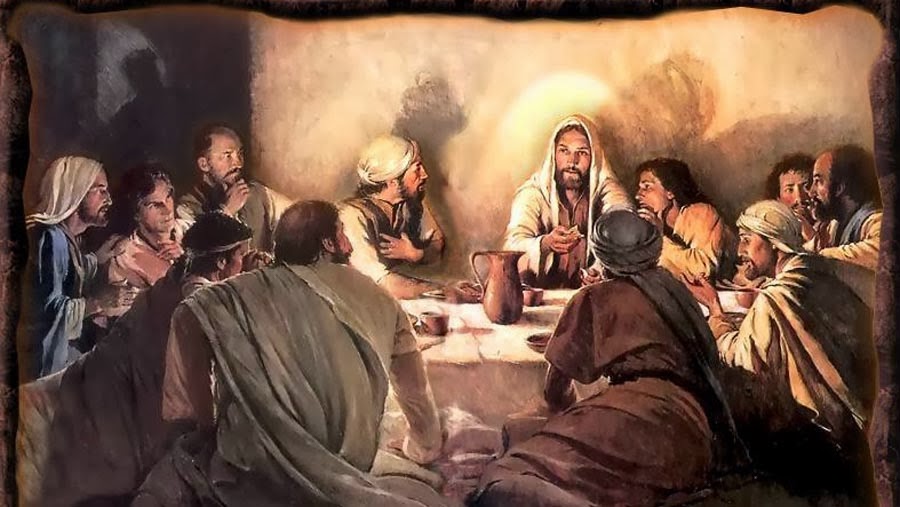
The seats in the upper rooms Luke 14

They look so comfortable.  And they provide the best view. And the most admired company.

No wonder we are drawn to them.

So I've been thinking about humility, trying to figure out the process of becoming humble and staying humble

William Barclay suggests simply remembering how unimportant you are to the whole picture:  how life and good work will go on when you are gone, how little you know compared to all knowledge, how little we have achieved compared to all that has or will or should be accomplished in the world.   Maintaining humility by keeping yourself in perspective, you might say.

But this struck me from a talk on humility given by Howard Hunter in 1984:  

"Our genuine concern should be for the success of others." 

In other words, we are more likely to maintain humility when we unselfishly seek the good of others and, when that good conflicts with our own desires, we work for that good rather than seeking first the goal of procuring good for ourselves.

So, rather than getting there early to get a good comfortable seat with the best view and near the people we think are cool and interesting, simply getting there, and being happy for the people who have good seats.


I like that.  True humility isn't so much focusing on how unimportant or imperfect you are. If it were, then Jesus would never be able to be humble.  It's focusing on how important to you the value and welfare of others is and your appreciation of them as individuals.  It's believing their good needs and desires to be as important as yours, valuing and appreciating them, being willing to put their needs and desires ahead of your own and being happy for them when their good needs and desires are met.


Friday, April 04, 2014

Abimelech, Genesis 20, Noble Generosity of Spirit in the Face of Dismay

"Abraham Receives Sarah from Abimelech", by Nicolaes Pieterszoon Berchem (1620-1683)

In Genesis 20, Abraham tells an untruth and, believing that what Abraham said is accurate, Abimelech acts upon that information. And then God comes to Abimelech in a dream and explains that the information is not true.

Abimelech's Response When a Prophet Says Something That is Not True

He does not lose faith. However he understands that the prophet has said something that is not true and that if he had acted upon that untruth doing so would have caused himself to sin. So he chooses not to act upon it.
It is notable that Abimelech comes to recognize the error after God comes to him in a dream. This determination is not just something that he just assumed based upon his own personal experience. His understanding comes from personal revelation.
Even if the prophet had continued to declare the falsehood he personally would not have lived as though it were truth. He would choose to act according to the personal revelation that he had received.
He was dismayed by the prophet's pronouncing something untrue, but not dismissive or rejecting. He does not accuse. He does, however, seek an explanation.  
When the explanation is revealed and it becomes apparent that there isn't even an inspired reason, but that the prophet has based his declaration upon false assumptions Abimelech treats Abraham generously and hospitably in spite of those false assumptions and the lie and, even more impressive, he values the prophet's subsequent prayers on his behalf.
This is a classic example of a noble and appropriate response of a well-intentioned imperfect, good person to a well-intentioned, good,and imperfect prophet (or other ecclesiastical leader).when an erroneous statement by the latter is perceived by the former, by divine revelation, to be damagingly wrong.
Abimelech calls it like he sees it without malice or faith crisis, seeks to understand why the untruth was stated, recognizes the sin that he might have been led to commit if he had assumed that the information was correct, and avoids committing that sin. And he is generous to the prophet and willing to continue to work with him in spite of the prophet's error and he welcomes the prophet's prayers on his behalf.
This is kindness, truth, calm and brotherhood amidst the initial dismay and recognition of error.
In this case that is particularly impressive because the erroneous assumptions Abraham made which led to the lie were about Abimelech himself, something that in most cases would serve to exponentially increase the sense of offence.

Abimelech's response to Abraham is sober and serious but it does not cause him to reject Abraham's prophetic mantle. And his response to his recognition of prophetic error is, ultimately, the moral high ground of kindness, generosity, and hospitality in spite of the error made as well as continued, realistic, appreciation for God's continued calling for Abraham and continued seeking to work with him, rather than against him.  (See Genesis 21)
The passage in Genesis 20 refers to God telling Abimelech that Abraham will pray for him after Sarah is returned to her home.  And it is clear that those prayers are healing for Abimelech and his household.  I have a feeling that after all of this revelation and discussion that Abimelech probably prayed for Abraham too.

In the ensuing months and years both ruler and prophet would benefit from each other's prayers, dignity and desire to do right in spite of Abraham's failure to always do it perfectly then and Abimelech's failure to do it perfectly (he failed to be aware enough of the misdeeds of his bullying servants at a later date) in the future.

Wednesday, March 19, 2014

When we are offered a job at the end of the day and invited to the wedding feast

We will be offered the job and I hope we are prepared for it. And we are already at the wedding feast.

There is a discussion going on over at wheatandtares.org about the recent actions of the Ordain Women movement. As I read through the responses there, I think the question is not whether or not women should be ordained. The question is what is a christian response to the question about the ordaining of women, particularly on the part of those who believe that it should or will occur. (The question of what the christian response of those who do not, would be is a very good one too but I won't address it here.)

I personally believe that women in the church should be prepared to officiate in priesthood ordinances. I believe that some of us are prepared to do so and some of us are not. Those of us who are not should prepare. When we will be asked to do that officiating, I have no idea. But it's clear to me that failing to be prepared to do so is foolish.

I also believe that celestial life is one of full equality. “Joint heirs” with Christ means equal amounts of everything, (including equal responsibilities and equal godly power that we call priesthood and every other good thing) if you have to quantify it, which, if you are celestial, you probably don't need to. But none of us are celestial, yet.

I think two of Jesus' conversations particularly apply to the current OW movement as well as many, many other similar situations.

The first is the parable of the lord of the vineyard who hires workers to work in his fields for the remainder of the day. (Matthew 20) He hires them at various times, some in the morning, at noon, in the afternoon and at the end of the day. And then he pays every single one of them a full day's wage. (To the great dismay of the workers who had been working since the early morning.) Whether the worker is hired early in the day or an hour before quitting time makes no difference in the wages/blessing/gifts/results for the workers. And the lord of the vineyard is the one who decides who gets hired when for that job. I think in a situation like that the workers in the marketplace hoping to be hired who had to wait until the afternoon or the end of the day were probably anxious or upset or hot or concerned about unemployment and money for themselves and/or their also-waiting workers or something similar as the day wore on. But they did get hired and did work, and they did receive, for that work, the same benefits from the lord that all the other workers received.

The second is Jesus remarks to his disciples about choosing where to sit at a feast. (Luke 14) He tells them not to expect or head to the seats in the upper room where the more recognized guests were seated, assuming that such is your due. He says it is wiser to seat yourself in the lower room and be subsequently invited to the upper than it is to insist on sitting at the upper and be asked to move.

Both the parable and the piece of advice fly directly in the face of what one would assume when one is in the process of trying to attain something, be it good wages or a seat in the upper room or anything else.  But as in-efficacious and contrary to current cultural norms as they may seem, and whether or not you think they should apply here, I think they are what Jesus hopes of us.


Tuesday, March 11, 2014

The goal

The goal isn't to be able to do things.
The goal isn't to make a difference. 
The goal isn't to be needed, or respected or appreciated.
Those are all nice.
But
The goal is to be wise and to do good.
Every single day.


Monday, March 10, 2014

Mustard Seed

"Faith as a grain of mustard seed" being enough to move mountains is a concept that is familiar to a reader of the Bible.  I think it gets misconstrued.  Or at least, I think I've misconstrued it in the past.

It easily can be interpreted as something like this:  If you aren't [moving mountains/realizing what you hope for/accomplishing what you feel God calls you to do] then it's likely because you don't have enough faith. If your faith was as big as a mustard seed it would be enough to effectuate the desired results.  So therefore, the remedy is to muster more faith that you have now.  

But I think "enough faith" is an incorrect concept.  Look at how the mustard seed sized faith is discussed in Luke 17.

"The apostles said to the Lord, 'Increase our faith!"
So, who is speaking here?  The Lord's apostles.  The ones who have been faithfully sacrificing much and following him around and trying to live his teachings for years.  To do that would require faith in him.  But they obviously think that they lack enough faith and need more.  

"The Lord said, 'If you have faith as a grain of mustard seed, you will say to this sycamine tree, 'Be rooted up and be planted in the sea,' and it would obey you.'"
In other words, a tiny bit of faith (which is probably what the apostles would have admitted they had but which they were worried was not enough) is actually enough. It is enough to do any amazing thing that the Lord requires.  Once you have determined to follow Christ and to do his will and are doing so, as those apostles were trying to do, you do not need to be anxious about quantities of faith, you don't need to beat yourself up about not having enough or plead for a greater quantity in order make happen what needs to be done, you simply need the faith in the Lord that you have.  And even if it is only as big as a mustard seed, it  is enough.


Hmm, faith....seed...Alma 32 anyone?  There too, a seed is enough.

But what about the times when you exercise faith and what you feel called to effectuate doesn't happen????  Isn't that an indication that you didn't have enough faith?

Actually no.  If that is the case then every Old Testament prophet who was called to cry repentance and did so in spite of derision and persecution and hardship and the people ignored him and actually became more entrenched in their wickedness (and there were a number of those) didn't have enough faith.  Such an interpretation of those circumstances is rather ridiculous.

The simple fact that those prophets responded to the call and worked hand in had with the Lord and devoted their energy to the work was an indication that they, like those apostles in Luke 17, had "enough faith".  In Luke 17, Jesus is saying, "even if it feels only as small as a mustard seed to you, with God it is enough."

In the verses that follow Jesus makes an analogy, comparing our service to God with that of a servant's consistent, unheralded service to his master, and closes it with,"So likewise ye, when ye shall have done all those things which are commanded you, say We are unprofitable servants we have [just] done that which was our duty to do." 

I think Jesus is saying that he knows that his apostles feel that simply doing the faithful work that they've been called to do is not enough, that it's unprofitable, that because it is simply what God asked them to do and is expected of them and not wonderfully accompanied by praise and recognition or any remarkable or obvious manifestations of success, that their faith is not enough and that they are not doing enough.  But Jesus' message is that they are trusting and following their master and serving as they are asked to to the best of their abilities and that is what God expects.  And they should continue to do so. Even if the faith to do just what they are doing seems small to them,. With God as their master and with his grace it is enough.

If you must use a definition of increasing your faith perhaps it is best defined as as it is used in a rhetorical plea to God once said by Gordon B Hinckley: "And so, dear Father, increase our faith in Thee, and in Thy Beloved Son, in Thy great eternal work, in ourselves as Thy children, and in in our capacity to go and do according to Thy will and Thy precepts. "

Trust God and Jesus and their work, trust that you are God's child/servant and can do what he wants you to do regardless of the responses of others, and trust that his precepts will teach you how to do it in a godly way.

And though that may feel just about the size of a mustard seed to you, it is enough.


Thursday, March 06, 2014

Sorting Through Luke 16

The parable of the unjust steward (Luke 16:1-15) is obtuse in the KJV, and in the past I've found it confusing and just sort of tossed it in the "I don't get it" pile.   And then I encountered it again yesterday.  So today I took some time to read up on it and tease it out and translate it into a clearer form so that I could better understand it. 

And, like other times when I've done this, as might be expected, I found it sobering upon reflection.

1. A rich man had a steward who was accused of managing the estate wastefully.
2. So he called in the steward, told him to give an accounting of his stewardship and told him he was being fired.
3. The steward was understandably alarmed. The prospect of unemployment and unemployability with a bad recommendation from his current employer was imminent.
4. So he decided that he'd better go to work making arrangements necessary to be able to manage when that happened and made careful plans to do so
5-7. He called his master's creditors one by one and, in a friendly gesture, generously arranged to reduce their debts to his master by half. (They were obviously pleased and felt grateful and kindly disposed towards him as a result. They would certainly be inclined to help him find employment when he lost his job.)
8. When the master found out what the steward had done, rather than being upset at the reduction of the amount he was owed he was impressed at the steward's careful and savvy arranging of finances in order to manage his impending unemployment. Jesus says that in this world often the dishonest people pay more attention to details about money and make more effort to manage it carefully in order to prepare for the future than those who seek to follow and prepare to meet God.
9. So, he says, pay attention to money the way you would pay attention to a friend (be aware of the money you have, treat it with wisdom and do good with it); so that when you fail (die), you may be received into everlasting habitations (heaven).
10. Money isn't very important but just because it isn't important, you shouldn't ignore your stewardship over it. People who are careful and faithful in stewardship over unimportant things are generally careful and faithful in stewardship over important things. People who are not careful and faithful in stewardship over unimportant things are often not careful and faithful in important things.
11. If you haven't been a wise steward with your own money (used it according to God's purposes), how can you expect to be entrusted with stewardship over more important things?
12. If you haven't been careful and responsible with things that another man has entrusted you with, how can you expect to be entrusted [by God] with things of your own to manage for him?
13. You cannot serve two masters; you cannot have two main purposes that are at odds with each other. If you try, you will end up favoring one and resenting the other. You cannot have your main purpose be serving God and also have your main purpose being spending your money in ways that primarily benefit yourself.
14. And the Pharisees, who liked the idea of spending money on things that primarily benefited themselves , were derisive of this idea.
15. And Jesus said, you are justifying to others your desires to spend money for those things and those experiences and making that sound acceptable or virtuous, but God knows your heart. Men may be impressed by your justifications and laud you for them, but what you are advocating is shameful in God's opinion.

Wednesday, March 05, 2014

"That is the only source of healing."

One of my (non-biological) sisters, who is recovering from an awful abusive marriage and raising her children solo, wrote a piece that moved me when I read it yesterday.

It's here if you'd like to read it.

Tuesday, March 04, 2014

Wor

For me a lightbulb went on years ago when I realized that worship is becoming more in tune with God by being a vehicle for the carrying out of his will.

In other words, worship is work.

Before, I though worship was supposed to be transcendent enlightenment and communion with the divine, the kind epitomized by singing in the glorious choir in an echoing cathedral and peaceful rest listening to a holy sermon.


Or the energy of community harmony in study of the word with like-minded  disciples  


I'd work hard all week and hope and expect that time at church would be the source of the transcendent respite I needed that week.  But though those kinds of transcendent experiences are sweet, and seeking and finding such transcendent moments is worthy and refreshing for the soul, they are not the full meaning of the word "worship", the thing church meetings were for.

Having figured that out I now attend church knowing that it's going to be work; good work, but work nonetheless.  It is praying for those speaking at the pulpit, extending charity to the struggling teacher, helping children manage sacrament meeting, listening kindly to the ones I disagree with, thoughtful social interaction in the halls (so hard...), and being a conscious, warm welcomer.  It's all WORK with, sometimes, the pleasant gift of a flash of divine inspiration because of a comment made, or a person listened to or some quietude for the 5 minutes the sacrament is passed to the congregation, (but only if the children don't need help right at that moment as well).


And yeah, it's not relaxing.  So of course I come home tired.  Work makes me tired.

Once I figured that out and consciously made time for the other more restful spiritual things I sought (good theological discussions, contemplation, good music, peaceful fellowship or transcendent interaction with the divine) at times other than the three hour block, my relationship to church attendance changed.

So now I don't go to find peaceful respite.  I go expecting to have to work, and sometimes to have to work hard.  And I consciously set aside time to do the (also essential) transcendent communion moments at other times during the week.

Just for fun, there are some interesting etymologies involved in the word "worship", some a bit of a stretch but pleasant to play with if you are inclined.

"Wor"  a word in Geordie (North East England) dialect, an affectionate form of "our".
It's a sign of affection, of belonging in an emotional sense. It can be in a family, or it can be in the wider community. Either way it's a warm, positive, welcoming expression.

"Wor", from the Old Saxon "woero", meaning "worthy".

"~ship" from  the Old English "siepe" meaning "condition of being" and Proto-Germanic "skap" meaning  "to create, ordain or appoint"

Tuesday, February 11, 2014

Peaches and Walnuts: An allegory

Luke heard about the new high tech company, “Peach”, that was starting up.  He was among those invited to organizational meetings and the business outlined there and the groundwork already laid was exciting to him.  The potential for great success was evident and the market demand for the product, a new device with huge potential in the education market was going to be amazing.  Not only that, he knew the president of this new start up.  He was known for treating his employees well, sponsoring their further education, allowing much room for their creativity and offering excellent profit-sharing plans.  
He was thrilled at the prospect.  He knew that he had found his dream job: CEO of this new start up.  He loved organizing grand projects.  He loved the feeling that comes from successfully effectuating an outstanding business plan.  He loved the feeling that comes from being the mover and shaker, the MVP as it were, in a business.  He let the president of Peach know that he would be interested in having his resume added to the ones being considered for the position of CEO.
Accordingly his resume was considered and he went through the interview process.  His application made it all the way to the final group of candidates.  But, ultimately, he was not offered the job.
Luke was deeply disappointed but he was undaunted.  He still dreamed of being the mover and shaker in this new business.  He purchased stock in the new company and began attending stockholders meetings.  He wrote to and canvassed the other stockholders, outlining concerns about the business plan most recently outlined by the president of the company and urging that they join him in voting in new members of the board of directors, men and women who he knew would put pressure on the company to hire him on as CEO, or at least, COO.  He was intelligent and persuasive.  Peach was forced to mount a major campaign to contradict the inaccurate information Luke disseminated.   In spite of that, many stockholders responded positively to Luke’s efforts and at the next stockholders meeting wrote in the names of the people he proposed for the board during the voting.  Unfortunately for Luke, however, they were not a majority.
Luke’s application had been rejected and his efforts to gain what he desired through persuasion and campaign had failed.  He was not daunted.  He decided to try embedding himself and his influence in the company.
The company’s new product, the “Peach”, was being released to selected markets.  Luke headed to the company’s New Jersey regional offices, a new market where the Peach had not yet been released but where he knew it would be in great demand.  That office was under the direction of two young recent business school graduates who were setting up the office and awaiting further instructions and training before directing the release of the Peach in the New York/New Jersey market.  
Luke presented himself at that office as the son of the president of Peach and mentioned that he had attended the same university as the two regional managers as an undergraduate himself and that he actually remembered meeting them briefly at a Phi Kappa Phi banquet there.  Over the next few days, by spending hours and hours in their offices making himself helpful and engaging and employing his excellent skills at management and some very clever half-truths he was able to persuade those two young regional managers that the Peach needed to be released under his direction.  Luke was placing his money on the belief that an excellent execution of an important market release would prove to the company how vital and important his skill set and involvement would be to Peach.
The Peach was released in that market with far reaching and ultimately profound and positive effect.  However, to his great disappointment, the president of Peach, rather than being impressed or pleased was the opposite.  He arrived at the regional offices in person, ordered Luke out of them and the two young regional managers were sent off to be store managers in small towns in Nevada where they subsequently spent years training endless numbers of young transient employees and updating their knowledge at regional training seminars, being recognized and supported and eventually promoted as all good employees at Peach are, grateful that they had not been fired.  (Peach really is a good company to work for.)
Nursing his hurt pride and his disappointment over his expulsion from the regional office, Luke took some pride in the fact that he had, in his opinion, been the author of the release of the Peach in that regional market and that its release had, indeed,  drastically affected and improved education and learning in that market.  The Peach quickly became an essential component of education that was in great demand and rapidly became “the only game in town.”
Luke liked the idea that the highly successful release he had masterminded had been his brain child and had thoroughly cowed any competitors.  That sense of control and success was awesome.  He wanted to experience it again.
He flew to Nevada to see if he could enlist the cooperation of the two young managers that he had worked with in New Jersey, but, understandably, they didn’t trust him and refused.
He reviewed his options.  He’d applied for a top position at Peach and had not been hired.  He’d tried political maneuvering to get that position and had failed.  And he’d tried moving in uninvited and, though the success of those efforts had been thrilling they had been short-lived, and he was pretty sure he had permanently alienated the president of the company.  He’d been told in no uncertain terms that he was to stay out of company affairs.
That, he decided, was the clue for his next plan of action.  If he wanted to experience the heady aura of being the admired force behind a successful venture, and he couldn’t do in Peach, he'd do it out of Peach.  Even better, he’d do it against Peach.  He’d launch a competitor.
His new company, “Walnut”, made a huge splash when it launched its new device.  Shinier and faster than the Peach, with louder volume and more sparkles and a harder shell, it also was less expensive.  The cost cutting done to reduce the price resulted in the Walnut being less well made than the Peach; (the calculator app on it often malfunctioned and the device had a tendency to explode after a few years of use) but Luke’s degree in communication and his years of debate team championship and his business degree and experience made his direction of the advertising wildly successful.  There have also been campaigns that mail users coupons for prizes simply for logging certain numbers of hours on the devices that have kept sales strong.  Soon the Walnut was giving the Peach a run for its money.
Luke still runs Walnut.  And the Walnuts are still less expensive than the Peaches and sell well and they still, unfortunately, have that calculator glitch and they still explode.  But they are, incontrovertibly, an exciting device to own and use.
Luke’s resentment about his experience with Peach and the thrill he gets from running a successful company that is totally under his control keep him energized and focused.  Each time he recruits an employee away from Peach his sense of victory is sky high.  Each Walnut he sells is a personal dig at Peach and a reason to celebrate.  (One of his favorite stories to tell is that of the teenage son of one of those two Nevada store managers who used his birthday money to buy a Walnut.)  His dream is control of the market, reducing Peach’s market share to as close to zero as he can, showing Peach its mistake in not hiring him, that he really is the best man to run a company.
Peach and Walnut are still both powerhouses in the marketplace.  Walnut’s stock sells well these days.  Fortunes have been made with it.  
Walnut’s employees give the company mixed reviews.  Luke throws fabulous employee parties but his use of pyramid schemes in the company sales department leaves some employees unhappy.  The health benefits and retirement plans offered are not great.  And some complain that the organization is too top-down and controlling.  But the parties are amazing, often including cruises, and are geared to fostering company pride and camaraderie.  And they do that well.  Luke knows they keep his employees thinking twice before looking somewhere else for work.  When one actually does so, his co-workers generally think he’s foolish to leave.
So Luke lives on, working to live his dream of being the essential, irreplaceable leader, the mover and shaker who totally dominates the market, whose product is in great demand, and who is unquestionably the one who deserves and receives the credit for it.  It’s heady stuff.
Would he go back to Peach if he was offered the CEO position there now?
No, not likely.  He feels like the track he’s on is more likely to give him what he seeks than Peach would and he enjoys the management style that he employs at Walnut, which he knows would be resisted strongly at Peach.
And, of course, the longer you compete against another company the less you wish to be employed by it.  The blow to one’s pride would be nearly unbearable.
Buy out Peach with a hostile takeover?  That would be awesome, thinks Luke, but, unlike when he first started this journey, he’d never want to be employed there.
Luke may not be completely happy.  The rejection at Peach still sticks in his craw and he personally despises the president of Peach for that.  But the thrill of the battle and the sense of control and essentialness that he’s created for himself at Walnut are awesome.  He intends to stay the course.


Saturday, February 01, 2014

Clear about me and understanding the reality of you.

I have learned or relearned recently that I am at my best when I am fully aware of and able to articulate what I know and wish for AND when I am highly attuned to the reality of the feelings and words of a person with whom I am interacting, without chafing at them.

If I do the first without the second I tend towards selfishness or insensitivity.  If I do the second without the first I can tend to feel taken for granted and to feel disconnected and/or frustrated.

But when I do both together, I am more likely to feel aware, and at peace within, and more connected.  And my ability to act with purpose and clarity increases.

I should remember that.


Friday, January 24, 2014

Decluttering and Minimalism as Mission Prep.

Luke 9 and 10, the sending out of the 12 and the 70 to proclaim the Kingdom of God and to heal those who were ill.

"They were to travel light.  That was simply because the man who travels light travels far and fast.  The more a man is cluttered up with material things the more he is shackled to one place.  God needs a settled ministry; but he also needs those who will abandon earthly things to adventure for him."
~William Barclay, "The Gospel of Luke, Daily Study Bible Series", p. 115


Worship the Lord , Enrich Our Understanding, and Work Together to Bless

Over at thingsofmysoul.blogspot.com there was this commentary (part of which I've pasted and illustrated below) posted on January 22.  It's here if you are interested in reading the whole thing and the ensuing discussion.. I've been to a few Sundays like this. I wish we realized and did this more than we do.

In my opinion, the primary purposes of our Sunday meetings are as follows:  

1) Sacrament Meeting: Worship

2) Sunday School: Doctrinal instruction

3) PH & RS: Community building (including "fellowshipping" activities and temporal matters)

There is room for some overlap, but only within the parameters of the purposes. For example: 


1) It's OK to provide doctrinal instruction in Sacrament Meeting, but that instruction should be about worship-focused things. 


Grace, charity, meekness, forgiveness and any other godly characteristic is fine as a topic for a talk, as long as they are presented as aspects of true emulative worship - but tithing, food storage, HT & VT, etc. are not appropriate Sacrament Meeting topics. Anything can be related tangentially to worship by a good speaker, but it should not be necessary for a speaker to take a non-worship-focused topic and bend it into an appropriate topic.


(APF photo, Chevy Chase, MD)


2) Sunday School should be a school - and I prefer the group discussion model for ALL classes comprised of members who've been attending long enough to have a fairly solid doctrinal foundation. I want real meat in Gospel Doctrine, for example - with those members occasionally cycling through Gospel Essentials (maybe once every five years or so), just to make sure the foundation milk doesn't get sour.


3) PH & RS should be about people - defining and planning service, discussing HT & VT, discussing how to find and reach and inspire others, lessons on those things that really aren't worship-focused but community-centered (like tithing, food storage, emergency preparedness, fast offerings, even temple attendance, etc.), basic get-to-know-you activities, learning from the life experiences of others, genealogy, etc.


Lydia of Thyratira, by Harold Copping

Friday, January 10, 2014

When to hang in there and when to do something else

Recenlty, while visiting, J mentioned that some of the families in his ward choose, occasionally or regularly, not to send their children to nursery, generally because they perceive it as disorganized and chaotic and/or not very helpful to their child at this stage. He asked me what I thought about that sort of decision.


So I have been thinking about that. It seems to me that it’s related to the “flee into the wilderness” and “succor the weak” dichotomy that often raises its head in the process of raising children. How do you strike the balance between a) encouraging your children to hang in there and help and b) finding good alternatives that do not include participating if participation is damaging? And how damaging is too damaging? How do you tell when it’s time to do which?

As I look at stories of people in the scriptures I find that that sometimes the counsel is to hang in there and “strengthen the feeble knees”, and sometimes the counsel is to do something else. I think it’s important to note that in each of those situations was no change in the individual’s theology and never, in their creation of something else, bitterness, and always, charity and openness to partially or fully re-engage in an activity when directed. So I’m not talking about rejection or despair, I’m just talking about knowing when to hang in there to help and when it’s time to change the nature of your involvement.

I remember counseling with H. over the challenge of dealing with A.'s constant fascination with violence and anti-social disruption in quorum activities, with Y. over whether or not to continue attending Sunday school classes where behavior was destructive, with K. on how to respond to her children’s complaints about their seminary teacher’s obstructive and competitive methods, I remember my father having pleasant, thoughtful gospel discussions in the car in the parking lot at church when my brother protested that he hated his Sunday school class, I remember my mother worrying over children (not her own) in the Primary she served in who really wanted to learn but who were thwarted by the behaviors of disruptive and unkind classmates.

Those are all church examples, but the same sorts of dilemmas turn up just as frequently at work, in schooling, in politics, in recreation and in community service.

As a parent it is tricky. You want to teach your children how to cope with bad behavior, to be supportive of people who are trying to do good, and to respond to difficult situations with courage and charity. At the same time, you realize that your children are not as powerful and competent as adults. They are still learning and vulnerable. When to teach and encourage coping and helping skills and when to create an alternative to a situation that is damaging while still being supportive of the good people who are called to stay? Sometimes you will be inspired to do one, and sometimes you will be inspired to do the other.

I think that, whichever of the two you are inspired to do, in whichever situation comes up, there are certain gospel principles that will be essential to that decision.

First, there is the real need for your child to feel like his feelings, responses to the situation, and his protests are, in your opinion, legitimate concerns that you respond to with empathy. Whether the decision is to hang in there or to do something else, he needs to know that you have his back and think his ideas and feelings are of vital importance to you and that you consider them deeply. That requires careful listening without contradicting or minimizing what the child is saying. Empathetic listening is also important in considering the needs of the child rather than your own because choosing for your child based on your own feelings alone can be detrimental, even manipulative, to your relationship with the child. 


Second there is the need for the child to learn how to respond with charity. This he learns from you. This Nephi learned from his father’s response to the people in Jerusalem and his response to Laman and Lemuel. Sorrow for sin and no rancor towards for the people who harm, either on purpose or inadvertently is a godly skill to learn. If the decision is to hang in there, that means discussing how to respond with charity in bad situations. If the decision is to create an alternative, that means learning how to proceed on that new path without denigrating the situation that you are choosing not to participate in and being supportive of it in ways that are helpful to those who are still in it.


Third, the child needs to be a vital participant in the discussion of the problem and the creating and testing of solutions. He will need that skill as an adult. It is important that he be able to experiment and practice it with you.


Fourth, the child needs to learn the process of discerning personal inspiration, the process of making a decision and seeking spiritual affirmation, then, down the road, discussing it again with the Lord, making changes as inspiration and circumstances and strengths change. Inspiration to a certain course of action at a given moment is not to be taken as a permanent decision governing the rest of one’s life. If he learns that personal revelation is an ongoing experience with ongoing situations it will save him much frustration all his life.


When they are small, your children have very little experience and your part in making the decisions and helping them to cope or to create and manage an alternative will be huge. As they grow, their experience increases, they’ve started picking up on the principles you’ve been modeling, and the ratio of your involvement to their initiative slowly changes over time. The four principles, however, empathetic, respectful listening, charity, creative problem solving, and personal revelation for one’s own life and one’s own tasks always remain the same.

The goal is to raise children who, by the time they are adults, have learned how to deal wisely with difficult situations, how to evaluate carefully the struggles of others that make group work difficult, how to respond with charity to those who fail to do what’s needful, and how to determine when they have the resources necessary to pitch in and help and when they need to bow out and find other ways to do the good that’s not being done.

So, my answer to J.'s question would probably be another question: were those four principles part of the decision? The parent of a nursery child could use those four principles and make a decision to stay and the parent of another could make a decision to do something else using those same four principles, and both would be doing what was most helpful in the life of the child. And in that case, both would be wise decisions.

Friday, January 03, 2014

Send Me

Send me, I will be thy son, I will do the job with 100% results for sure, give me thine honor.

or

Thy will be done, the glory be thine.


They actually, at this point, were both interested in allying themselves with the Father.

I am too.

This wasn't just a one-time event with two people proposing two ways of going about God's work.

I think this is a conflict of interests that goes on in the hearts of God's disciples every day.  It feels so good for God to give you a job to do and  to do it really well and feel the respect that comes from others when you do it.  ("not one soul will be lost...surely I will do it...give me thine honor") And we want that feeling again.  And subconsciously we make that good feeling the measure we use to feel success, worthiness or acceptability in God's eyes.

But that's not the path outlined.

The measure, if we need one, is simply our willingness to do his will, however we can, and to fully understand that any success is simply His.  ("thy will be done..the glory be thine")

And I believe that outlined path leads to a place where we don't even need a personal way to measure.

It seems to me that unity with the Father's will makes it so you don't think about how you measure up and the respect of others for what you do becomes irrelevant..


Sunday, December 29, 2013

Family photo circa 1919


From left to right, June Ida Holmes, Ernest Eldredge Holmes, Mary Laurine Holmes, Ida (Eldredge) Holmes, Samuel Lamar Holmes, Ernest Samuel Holmes.

Mary Laurine Holmes, who was about 10 years old when this photo was taken, is my maternal grandmother.

Wednesday, December 18, 2013

It's good and worthy and the answer is no.

I have a young, devout, female friend, who, when she approached the age at which she could apply to serve as a missionary, felt that it was likely that serving a mission would be the best thing that she could do and she was excited at the prospect.

Being devout, she took that decision to the Lord in prayer, and after much seeking, felt that the answer was no, she should not.  She was not particularly happy with that answer.  Friends of hers were departing for missions, it looked like good, praiseworthy, and exciting work to be engaged in.  She would have loved to have received a "yes".

It was also difficult for her because in her circles of friends, serving a mission was considered one of the most devoted and praiseworthy and positive decisions one could take.  Women who did so were admired and respected.  Why, if it were an option, and she was willing, would the Lord tell her no?


We live in a world where it is considered best to do as many good things as possible; that passing up opportunities to do a good thing is something that you will regret; or if you cannot do all the good options at least do the options that are perceived as the most noble and good, if you have to pick and choose.

But Jesus didn't say do as many good things as you can.  And he didn't say that the ones you think are be most noble and good are the ones you should do.  He said, do good, and the standard he held for that for himself in that regard was "doing the will of the Father".

Jesus could have done many good things in his lifetime that he did not do.  He focused on the one thing that the Father had indicated was most important for him to do, which, in his case, was making it possible for us to be "raised up at the last day".

John, chapter 6


That's a much bigger calling than any of us have, but the principle applies to all of his disciples.  Our best task or purpose at any given stage of our lives, in God's eyes, is the one he sets for us.  And that is not necessarily, every time, the one we assume would be the most noble or admirable.  

The goal is not to do the tasks we think are the most noble and good.  Nor is it to take advantage of every opportunity to do good. Rather it is to tackle the tasks He calls us to do.  And to celebrate when our sisters and brothers do theirs.


Tuesday, December 10, 2013

Teaching after 40 Days


Jesus' early teaching, as chronicled by Luke, was powerful.
"Jesus returned in the power of the Spirit into Galilee: and there went out a fame of him through all the region round about."
"And he taught in their synagogues, being glorified of all."
"And all bare him witness and wondered at the gracious words that proceeded out of his mouth."
"And they were astonished at his doctrine: for his word was with power."

It's interesting to me that these words fall hard on the heels of Jesus' 40 day fast and his encounter with Satan in the wilderness, in which Satan tried to persuade him to act contrary to the will of God.  Was Jesus reminded of what powerful teaching is and what it is not by that encounter?


Three temptations are chronicled in Luke, chapter 4: the temptation to turn stones into bread to assuage his hunger, the temptation to assume and enjoy worldly power, and the temptation to go careening off the pinnacle of the temple and be caught by angels.  Satan tries to persuade Jesus to his way of thinking by telling him that he won't have to be hungry if he does.  He tries to persuade Jesus to his way of thinking by telling him that he will not only be a powerful influence in the world but also one that others will listen to and obey and praise and give much wealth and prestige to if he does.  And he tries to entice him to his way of thinking by employing the allure of excitement and thrilling experiences.


And as you read Jesus further teaching in the rest of that chapter and over the next three years, he eschews all three methods of presenting his message.

He feeds people when they have traveled far to listen to him are far from food and helps them catch fish, but the only bread he ever promises they will have if they ally themselves to his gospel is "the bread of life."  Though there is work to be done to help feed those who are hungry in his life there is no promise of freedom from hunger in discipleship.

His sermons are clear that discipleship to him is a life of humility, meekness, forgiveness, turning the other cheek, being submissive to those in power, and serving one another.  There is no promise or increase of social, political or economic power or influence or respect coming to those who choose his way.

And there are no thrills.  There is a lot of walking on dusty roads, and stopping to talk and to help and a lot of prayer in his work.  But anything unusual, like a healing, is understated and usually wrapped up with the admonition to "tell no man".   And he expects his disciples to do the same.

And his teaching, accepted by some and soundly rejected by others, was powerful.

As I teach the gospel to young people, I think I should keep this in mind.

Saturday, December 07, 2013

What might we aim for?


From Morgan's "Five Goals" (to teach young people) posted over at By Common Consent:

Receive baptism and the gift of the Holy Ghost
Become a faithful home or visiting teacher
Make and keep temple covenants
Get a good education
Give back.


And learn to love like Jesus does.  (Marvin Ashton)

Wednesday, December 04, 2013

Testimony Meeting

Mennonite church meeting in the Canary Islands

"I sat in many testimony meetings as a child and still occasionally hear our pastor call for words from the congregation.  If I think I should speak, my palms still perspire and my knees tremble.  Will people think my ideas foolish?  Will they trust my experience? Is my life consistent enough that I dare open my mouth publicly?  What I have to say is nothing new anyway!

."..let's look at what a testimony meeting tries to do.  Such a meeting does not report how God acts or how people always respond.  It never assumes common experience--otherwise there would be no point at all in holding it..  A testimony meeting expects that God gives unique skills and experiences to people and communities, and that sharing stories will strengthen everyone who hears.  A testimony meeting believes in 'many gifts, one Spirit'." [1st Corinthians 12]
~Doris Janzen Longacre, Living More With Less, p. 31-32

Longacre was a devout Mennonite.  I have benefited from what she wrote and compiled over the years.  And this passage struck me today.  

I listened to a diverse array of testimonies in my congregation last Sunday.  Did you?

It's easy for me to sit there grading testimonies:  
"Makes sense."  
"Yeah."  
"What?"  
"Not a chance, Buster". 
"Still has much to learn."  
"Some truth there."   
"Uh oh.  La-la land".  
And then compare what I hear with my own understanding and faith and consider whether or not my testimony, if expressed, would be helpful at all to people who are listening the way I am.

Our testimony meetings are, I realize, better understood and more beneficial if we see them as an opportunity to listen to people talk about experiences and belief that they feel have been touched by the Spirit of God rather than only an opportunity to listen to others confirm, by the Spirit, what we in the congregation already know.  We should not see testimony meetings primarily as an opportunity for people to only talk, when spiritually moved to stand and speak, about aspects of commitment and faith that feel common to our mutual experience.  As I listen to a diversity of experiences I widen my understanding of how God is perceived to work in many different lives, and that gives me much to consider and softens my heart. 

When we listen to testimonies born that reflect experiences different from our own with a kind heart, it is a gift both to the speaker and to ourselves.  Of course we live in an imperfect world with imperfect people and so not everyone will listen to you that way when you stand and speak.  I certainly slip into testimony critique mode easily and I assume that others do too.  And not everyone who bears testimony feels free to express, fully, what they feel in their heart.  So I acknowledge that what I am proposing may seem a bit daunting if you look at it from the point of view of a potential testimony bearer.  But I believe that the more of us who understand this way of listening to and bearing testimony, the more edifying our listening experiences will be.

Many Gifts, One Spirit  (a nice song to listen to)


Sunday, December 01, 2013

Blessed art thou


"And it came to pass, that, when Elisabeth heard the salutation of Mary, the babe leaped in her womb; and Elisabeth was filled with the Holy Ghost:
 And she spake out with a loud voice, and said, Blessed art thou among women, and blessed is the fruit of thy womb...And blessed is she that believed: for there shall be a performance of those things which were told her from the Lord.."

I think about the common use of the word "blessed".  And I think about Mary.

What was she facing? 

The gift of being called to bear and raise God's son.  

The challenge of carrying an unborn child that is God's son while betrothed to Joseph.  How must it have felt to carry that child when probably no one would believe your story of an angelic annunciation and divine conception and at at time when sexual infidelity meant fierce social ostracism at best and stoning at worst?

And the eventual experience of witnessing the crucifixion of her child.

Blessed means more that just things that give us new, glorious tasks, or make life more peaceful or help us solve our problems.  Sometimes being blessed by God means that, along with the peaceful things and hopeful things, our course will take us through experiences that will require absolutely every ounce of faith and courage and trust in God we can muster and will still be grievous to be born.

Blessedness can require much of us.