Friday, January 24, 2014

Worship the Lord , Enrich Our Understanding, and Work Together to Bless

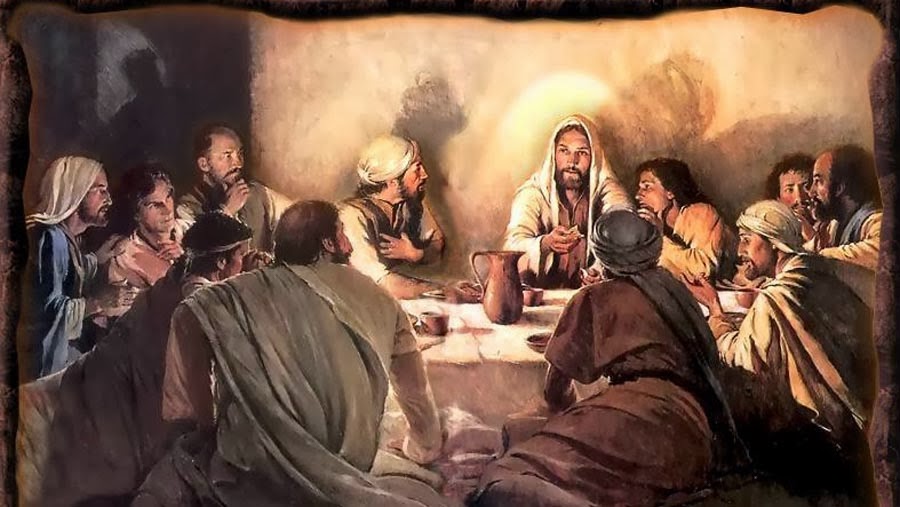
Over at thingsofmysoul.blogspot.com there was this commentary (part of which I've pasted and illustrated below) posted on January 22.  It's here if you are interested in reading the whole thing and the ensuing discussion.. I've been to a few Sundays like this. I wish we realized and did this more than we do.

In my opinion, the primary purposes of our Sunday meetings are as follows:  

1) Sacrament Meeting: Worship

2) Sunday School: Doctrinal instruction

3) PH & RS: Community building (including "fellowshipping" activities and temporal matters)

There is room for some overlap, but only within the parameters of the purposes. For example: 


1) It's OK to provide doctrinal instruction in Sacrament Meeting, but that instruction should be about worship-focused things. 


Grace, charity, meekness, forgiveness and any other godly characteristic is fine as a topic for a talk, as long as they are presented as aspects of true emulative worship - but tithing, food storage, HT & VT, etc. are not appropriate Sacrament Meeting topics. Anything can be related tangentially to worship by a good speaker, but it should not be necessary for a speaker to take a non-worship-focused topic and bend it into an appropriate topic.


(APF photo, Chevy Chase, MD)


2) Sunday School should be a school - and I prefer the group discussion model for ALL classes comprised of members who've been attending long enough to have a fairly solid doctrinal foundation. I want real meat in Gospel Doctrine, for example - with those members occasionally cycling through Gospel Essentials (maybe once every five years or so), just to make sure the foundation milk doesn't get sour.


3) PH & RS should be about people - defining and planning service, discussing HT & VT, discussing how to find and reach and inspire others, lessons on those things that really aren't worship-focused but community-centered (like tithing, food storage, emergency preparedness, fast offerings, even temple attendance, etc.), basic get-to-know-you activities, learning from the life experiences of others, genealogy, etc.


Lydia of Thyratira, by Harold Copping

Friday, January 10, 2014

When to hang in there and when to do something else

Recenlty, while visiting, J mentioned that some of the families in his ward choose, occasionally or regularly, not to send their children to nursery, generally because they perceive it as disorganized and chaotic and/or not very helpful to their child at this stage. He asked me what I thought about that sort of decision.


So I have been thinking about that. It seems to me that it’s related to the “flee into the wilderness” and “succor the weak” dichotomy that often raises its head in the process of raising children. How do you strike the balance between a) encouraging your children to hang in there and help and b) finding good alternatives that do not include participating if participation is damaging? And how damaging is too damaging? How do you tell when it’s time to do which?

As I look at stories of people in the scriptures I find that that sometimes the counsel is to hang in there and “strengthen the feeble knees”, and sometimes the counsel is to do something else. I think it’s important to note that in each of those situations was no change in the individual’s theology and never, in their creation of something else, bitterness, and always, charity and openness to partially or fully re-engage in an activity when directed. So I’m not talking about rejection or despair, I’m just talking about knowing when to hang in there to help and when it’s time to change the nature of your involvement.

I remember counseling with H. over the challenge of dealing with A.'s constant fascination with violence and anti-social disruption in quorum activities, with Y. over whether or not to continue attending Sunday school classes where behavior was destructive, with K. on how to respond to her children’s complaints about their seminary teacher’s obstructive and competitive methods, I remember my father having pleasant, thoughtful gospel discussions in the car in the parking lot at church when my brother protested that he hated his Sunday school class, I remember my mother worrying over children (not her own) in the Primary she served in who really wanted to learn but who were thwarted by the behaviors of disruptive and unkind classmates.

Those are all church examples, but the same sorts of dilemmas turn up just as frequently at work, in schooling, in politics, in recreation and in community service.

As a parent it is tricky. You want to teach your children how to cope with bad behavior, to be supportive of people who are trying to do good, and to respond to difficult situations with courage and charity. At the same time, you realize that your children are not as powerful and competent as adults. They are still learning and vulnerable. When to teach and encourage coping and helping skills and when to create an alternative to a situation that is damaging while still being supportive of the good people who are called to stay? Sometimes you will be inspired to do one, and sometimes you will be inspired to do the other.

I think that, whichever of the two you are inspired to do, in whichever situation comes up, there are certain gospel principles that will be essential to that decision.

First, there is the real need for your child to feel like his feelings, responses to the situation, and his protests are, in your opinion, legitimate concerns that you respond to with empathy. Whether the decision is to hang in there or to do something else, he needs to know that you have his back and think his ideas and feelings are of vital importance to you and that you consider them deeply. That requires careful listening without contradicting or minimizing what the child is saying. Empathetic listening is also important in considering the needs of the child rather than your own because choosing for your child based on your own feelings alone can be detrimental, even manipulative, to your relationship with the child. 


Second there is the need for the child to learn how to respond with charity. This he learns from you. This Nephi learned from his father’s response to the people in Jerusalem and his response to Laman and Lemuel. Sorrow for sin and no rancor towards for the people who harm, either on purpose or inadvertently is a godly skill to learn. If the decision is to hang in there, that means discussing how to respond with charity in bad situations. If the decision is to create an alternative, that means learning how to proceed on that new path without denigrating the situation that you are choosing not to participate in and being supportive of it in ways that are helpful to those who are still in it.


Third, the child needs to be a vital participant in the discussion of the problem and the creating and testing of solutions. He will need that skill as an adult. It is important that he be able to experiment and practice it with you.


Fourth, the child needs to learn the process of discerning personal inspiration, the process of making a decision and seeking spiritual affirmation, then, down the road, discussing it again with the Lord, making changes as inspiration and circumstances and strengths change. Inspiration to a certain course of action at a given moment is not to be taken as a permanent decision governing the rest of one’s life. If he learns that personal revelation is an ongoing experience with ongoing situations it will save him much frustration all his life.


When they are small, your children have very little experience and your part in making the decisions and helping them to cope or to create and manage an alternative will be huge. As they grow, their experience increases, they’ve started picking up on the principles you’ve been modeling, and the ratio of your involvement to their initiative slowly changes over time. The four principles, however, empathetic, respectful listening, charity, creative problem solving, and personal revelation for one’s own life and one’s own tasks always remain the same.

The goal is to raise children who, by the time they are adults, have learned how to deal wisely with difficult situations, how to evaluate carefully the struggles of others that make group work difficult, how to respond with charity to those who fail to do what’s needful, and how to determine when they have the resources necessary to pitch in and help and when they need to bow out and find other ways to do the good that’s not being done.

So, my answer to J.'s question would probably be another question: were those four principles part of the decision? The parent of a nursery child could use those four principles and make a decision to stay and the parent of another could make a decision to do something else using those same four principles, and both would be doing what was most helpful in the life of the child. And in that case, both would be wise decisions.

Friday, January 03, 2014

Send Me

Send me, I will be thy son, I will do the job with 100% results for sure, give me thine honor.

or

Thy will be done, the glory be thine.


They actually, at this point, were both interested in allying themselves with the Father.

I am too.

This wasn't just a one-time event with two people proposing two ways of going about God's work.

I think this is a conflict of interests that goes on in the hearts of God's disciples every day.  It feels so good for God to give you a job to do and  to do it really well and feel the respect that comes from others when you do it.  ("not one soul will be lost...surely I will do it...give me thine honor") And we want that feeling again.  And subconsciously we make that good feeling the measure we use to feel success, worthiness or acceptability in God's eyes.

But that's not the path outlined.

The measure, if we need one, is simply our willingness to do his will, however we can, and to fully understand that any success is simply His.  ("thy will be done..the glory be thine")

And I believe that outlined path leads to a place where we don't even need a personal way to measure.

It seems to me that unity with the Father's will makes it so you don't think about how you measure up and the respect of others for what you do becomes irrelevant..


Sunday, December 29, 2013

Family photo circa 1919


From left to right, June Ida Holmes, Ernest Eldredge Holmes, Mary Laurine Holmes, Ida (Eldredge) Holmes, Samuel Lamar Holmes, Ernest Samuel Holmes.

Mary Laurine Holmes, who was about 10 years old when this photo was taken, is my maternal grandmother.

Wednesday, December 18, 2013

It's good and worthy and the answer is no.

I have a young, devout, female friend, who, when she approached the age at which she could apply to serve as a missionary, felt that it was likely that serving a mission would be the best thing that she could do and she was excited at the prospect.

Being devout, she took that decision to the Lord in prayer, and after much seeking, felt that the answer was no, she should not.  She was not particularly happy with that answer.  Friends of hers were departing for missions, it looked like good, praiseworthy, and exciting work to be engaged in.  She would have loved to have received a "yes".

It was also difficult for her because in her circles of friends, serving a mission was considered one of the most devoted and praiseworthy and positive decisions one could take.  Women who did so were admired and respected.  Why, if it were an option, and she was willing, would the Lord tell her no?


We live in a world where it is considered best to do as many good things as possible; that passing up opportunities to do a good thing is something that you will regret; or if you cannot do all the good options at least do the options that are perceived as the most noble and good, if you have to pick and choose.

But Jesus didn't say do as many good things as you can.  And he didn't say that the ones you think are be most noble and good are the ones you should do.  He said, do good, and the standard he held for that for himself in that regard was "doing the will of the Father".

Jesus could have done many good things in his lifetime that he did not do.  He focused on the one thing that the Father had indicated was most important for him to do, which, in his case, was making it possible for us to be "raised up at the last day".

John, chapter 6


That's a much bigger calling than any of us have, but the principle applies to all of his disciples.  Our best task or purpose at any given stage of our lives, in God's eyes, is the one he sets for us.  And that is not necessarily, every time, the one we assume would be the most noble or admirable.  

The goal is not to do the tasks we think are the most noble and good.  Nor is it to take advantage of every opportunity to do good. Rather it is to tackle the tasks He calls us to do.  And to celebrate when our sisters and brothers do theirs.


Tuesday, December 10, 2013

Teaching after 40 Days


Jesus' early teaching, as chronicled by Luke, was powerful.
"Jesus returned in the power of the Spirit into Galilee: and there went out a fame of him through all the region round about."
"And he taught in their synagogues, being glorified of all."
"And all bare him witness and wondered at the gracious words that proceeded out of his mouth."
"And they were astonished at his doctrine: for his word was with power."

It's interesting to me that these words fall hard on the heels of Jesus' 40 day fast and his encounter with Satan in the wilderness, in which Satan tried to persuade him to act contrary to the will of God.  Was Jesus reminded of what powerful teaching is and what it is not by that encounter?


Three temptations are chronicled in Luke, chapter 4: the temptation to turn stones into bread to assuage his hunger, the temptation to assume and enjoy worldly power, and the temptation to go careening off the pinnacle of the temple and be caught by angels.  Satan tries to persuade Jesus to his way of thinking by telling him that he won't have to be hungry if he does.  He tries to persuade Jesus to his way of thinking by telling him that he will not only be a powerful influence in the world but also one that others will listen to and obey and praise and give much wealth and prestige to if he does.  And he tries to entice him to his way of thinking by employing the allure of excitement and thrilling experiences.


And as you read Jesus further teaching in the rest of that chapter and over the next three years, he eschews all three methods of presenting his message.

He feeds people when they have traveled far to listen to him are far from food and helps them catch fish, but the only bread he ever promises they will have if they ally themselves to his gospel is "the bread of life."  Though there is work to be done to help feed those who are hungry in his life there is no promise of freedom from hunger in discipleship.

His sermons are clear that discipleship to him is a life of humility, meekness, forgiveness, turning the other cheek, being submissive to those in power, and serving one another.  There is no promise or increase of social, political or economic power or influence or respect coming to those who choose his way.

And there are no thrills.  There is a lot of walking on dusty roads, and stopping to talk and to help and a lot of prayer in his work.  But anything unusual, like a healing, is understated and usually wrapped up with the admonition to "tell no man".   And he expects his disciples to do the same.

And his teaching, accepted by some and soundly rejected by others, was powerful.

As I teach the gospel to young people, I think I should keep this in mind.

Saturday, December 07, 2013

What might we aim for?


From Morgan's "Five Goals" (to teach young people) posted over at By Common Consent:

Receive baptism and the gift of the Holy Ghost
Become a faithful home or visiting teacher
Make and keep temple covenants
Get a good education
Give back.


And learn to love like Jesus does.  (Marvin Ashton)

Wednesday, December 04, 2013

Testimony Meeting

Mennonite church meeting in the Canary Islands

"I sat in many testimony meetings as a child and still occasionally hear our pastor call for words from the congregation.  If I think I should speak, my palms still perspire and my knees tremble.  Will people think my ideas foolish?  Will they trust my experience? Is my life consistent enough that I dare open my mouth publicly?  What I have to say is nothing new anyway!

."..let's look at what a testimony meeting tries to do.  Such a meeting does not report how God acts or how people always respond.  It never assumes common experience--otherwise there would be no point at all in holding it..  A testimony meeting expects that God gives unique skills and experiences to people and communities, and that sharing stories will strengthen everyone who hears.  A testimony meeting believes in 'many gifts, one Spirit'." [1st Corinthians 12]
~Doris Janzen Longacre, Living More With Less, p. 31-32

Longacre was a devout Mennonite.  I have benefited from what she wrote and compiled over the years.  And this passage struck me today.  

I listened to a diverse array of testimonies in my congregation last Sunday.  Did you?

It's easy for me to sit there grading testimonies:  
"Makes sense."  
"Yeah."  
"What?"  
"Not a chance, Buster". 
"Still has much to learn."  
"Some truth there."   
"Uh oh.  La-la land".  
And then compare what I hear with my own understanding and faith and consider whether or not my testimony, if expressed, would be helpful at all to people who are listening the way I am.

Our testimony meetings are, I realize, better understood and more beneficial if we see them as an opportunity to listen to people talk about experiences and belief that they feel have been touched by the Spirit of God rather than only an opportunity to listen to others confirm, by the Spirit, what we in the congregation already know.  We should not see testimony meetings primarily as an opportunity for people to only talk, when spiritually moved to stand and speak, about aspects of commitment and faith that feel common to our mutual experience.  As I listen to a diversity of experiences I widen my understanding of how God is perceived to work in many different lives, and that gives me much to consider and softens my heart. 

When we listen to testimonies born that reflect experiences different from our own with a kind heart, it is a gift both to the speaker and to ourselves.  Of course we live in an imperfect world with imperfect people and so not everyone will listen to you that way when you stand and speak.  I certainly slip into testimony critique mode easily and I assume that others do too.  And not everyone who bears testimony feels free to express, fully, what they feel in their heart.  So I acknowledge that what I am proposing may seem a bit daunting if you look at it from the point of view of a potential testimony bearer.  But I believe that the more of us who understand this way of listening to and bearing testimony, the more edifying our listening experiences will be.

Many Gifts, One Spirit  (a nice song to listen to)


Sunday, December 01, 2013

Blessed art thou


"And it came to pass, that, when Elisabeth heard the salutation of Mary, the babe leaped in her womb; and Elisabeth was filled with the Holy Ghost:
 And she spake out with a loud voice, and said, Blessed art thou among women, and blessed is the fruit of thy womb...And blessed is she that believed: for there shall be a performance of those things which were told her from the Lord.."

I think about the common use of the word "blessed".  And I think about Mary.

What was she facing? 

The gift of being called to bear and raise God's son.  

The challenge of carrying an unborn child that is God's son while betrothed to Joseph.  How must it have felt to carry that child when probably no one would believe your story of an angelic annunciation and divine conception and at at time when sexual infidelity meant fierce social ostracism at best and stoning at worst?

And the eventual experience of witnessing the crucifixion of her child.

Blessed means more that just things that give us new, glorious tasks, or make life more peaceful or help us solve our problems.  Sometimes being blessed by God means that, along with the peaceful things and hopeful things, our course will take us through experiences that will require absolutely every ounce of faith and courage and trust in God we can muster and will still be grievous to be born.

Blessedness can require much of us.


Thursday, November 21, 2013

The Principle of Modesty. Teaching Beyond the Rules


There are many discussions going on in my religious community about how NOT to teach modesty.  But if we are to throw out misleading or inadequate ways of teaching the principle we cannot just rail against the current approaches.  It is imperative that we create something with which to replace them.

I believe that the key is to help young people understand that modesty isn't just how you dress. It is actually an intricate combination of the divine attributes of confidence, humility, respect and charity in multiple aspects of our lives. Modesty in its most complete forms resides most predominantly in our spirits. Teaching that the definition of modesty is the way we dress is akin to telling someone that the definition of a solidly constructed house is the location of its doors and windows.  The principles of sound construction engineering in the construction of a house will influence the location of the doors and windows.  Similarly, principles of modesty that you put into practice in your life will influence the way you dress.  But locating the doors and windows in certain locations will not, by itself, create a sound structure.  And learning "modest" clothing practices will fail, by itself, to create the divine character of modesty in your soul.

If modesty is, in fact, a combination of different divine attributes, in other words the “divine nature” young women are reminded of each Sunday, perhaps one way to approach this would be to see if we can identify divine attributes in any of the following authoritative definitions of “modesty”.

mod·es·ty First known use of the word in English: 1531
[mod-uh-stee]
noun, plural mod·es·ties.
1. freedom from vanity, boastfulness,etc.
2. Regard for decency of behavior, speech, dress, etc.
3. Simplicity; moderation.

It's worth noting that the the definition of modesty given on lds.org is clearly related to these definitions:

Do you see any of God's qualities in those definitions?

"Modesty is an attitude of propriety and decency in dress, grooming, language, and behavior. If we are modest, we do not draw undue attention to ourselves. Instead, we seek to 'glorify God in [our] body, and in [our] spirit'"

While looking at thesaurus lists of synonyms and antonyms, you may find further insights into the divine nature of modesty:
Synonyms
down-to-earthness, humbleness, lowliness, meekness, humility


Antonyms
arrogance, assumption, bumptiousness, conceit, egoism, egotism, haughtiness, hauteur, huffiness, imperiousness, loftiness, lordliness, peremptoriness, pomposity, pompousness, presumptuousness, pretense, pretension, pretentiousness, pride, pridefulness, superciliousness, superiority, toploftiness

Near Antonyms
aggressiveness, audaciousness, brashness, brassiness, cheek, cheekiness, cockiness, forwardness, overconfidence, swagger, swash, temerity, impertinence, impudence, insolence, nerve, sauciness, boastfulness, chest-thumping, self-applause, self-assumption, self-centeredness, self-complacency, self-conceit, self-glorification, self-importance, self-satisfaction, vaingloriousness, vanity, disdain, flamboyance, ostentation, ostentaciousness, showiness

Think about the nature of God as it relates to the above qualities (and their antonyms).  What can you add to your list of godly characteristics after reading through them?

 it is interesting to see how the list you have so far relates to what several church leaders of our church as well as other churches have said as they've tried to describe modesty.

Modesty is often talked of in terms of dress and appearance, but modesty encompasses much more than the outward appearance. It is a condition of the heart.” Ann Dalton

"Modesty is not just cultural. Modesty is a gospel principle that applies to people of all cultures and ages. In fact, modesty is fundamental to being worthy of the Spirit. To be modest is to be humble, and being humble invites the Spirit to be with us.” (Robert D. Hales, Modesty, Liahona, Aug 2008)

"Modesty is the virtue that presents goodness in its proper color: one of elegance rather than affluence, economy rather than extravagance, naturalness rather than ostentation. 'What a power has white simplicity,' as Keats has aptly remarked. Modesty is the virtue that allows one to focus on what is good without being distracted by irrelevant superficialities." ~Donald DeMarco, Catholic theologian

"Modesty is, as it were, the body's conscience. The modest person is not interested in displaying his talents and attainments for people to admire. He even shuns making himself the subject of conversation. He is more eager to know what he needs to know than to parade what he already knows. He has a healthy sense of himself as he is and is less concerned about how others view him...The modest person is aware of his limitations and retains the capacity to blush. A person blushes when he is suddenly the object of praise or attention. It catches him off guard at a moment when he is interested in something other than himself. The essence of modesty is self-forgetfulness." ~Donald Demarco,

In Doctrine and Covenants 4:6 there is a nice list of godly attributes:
"Remember faith, virtue, knowledge, temperance, patience, brotherly kindness, godliness, charity, humility, dilgence"

Look at the list you are compiling.  Are there other godly attributes that you would add to this list to describe modesty?

(Important side note: virtue is another oft misunderstood word. The definition I'd assume here is the dictionary one of “moral excellence, goodness, righteousness, or conformity of one's life and conduct to moral and ethical principles, uprightness)

Now that you've read through the above descriptions of the nature of modesty and this list of divine qualities in Doc & Cov 4:6 and added a few of your own, you have, I believe, some keys to the major question I believe each of us needs to answer thoughtfully.

Which divine attributes of God, “divine nature”, are essential parts of the definition of modesty?

Write that down.

Once that list is compiled and written out, can you find those divine attributes that you've designated referenced in the following scriptures?

"Clothe yourselves, all of you, with humility toward one another, for “God opposes the proud but gives grace to the humble.” Humble yourselves, therefore, under the mighty hand of God so that at the proper time he may exalt you," 1 Peter 5:5-6

Since God chose you to be the holy people whom he loves, you must clothe yourselves with tenderhearted mercy, kindness, humility, gentleness, and patience.” Colossians 3:12

It is interesting to to me to contemplate the “clothing” metaphors used here, and particularly in reference to this verse:

"For ye are bought with a price: therefore glorify God in your body, and in your spirit, which are God’s." 1st Corinthians 6:20

Consider: What does it mean to glorify God in your spirit, or to clothe your spirit in a way which glorifies God and expresses God's divine attributes that you've identified in this exercise?

What does it mean to glorify God in your body, or to clothe your body in a way which glorifies God and expresses God's divine attributes that you've identified?  

Here are a few quotes that express how some others have answered those questions:

To be gentle and kind, modest and truthful, to be full of faith and integrity, doing no wrong is of God; goodness sheds a halo of loveliness around every person who possesses it, making their countenances beam with light, and their society desirable because of its excellency. They are loved of God, of holy angels, and of all the good earth..” Brigham Young

1 Timothy 2:9-10 which says “In like manner also, that women adorn themselves in modest [remember the definition of “modest” we've learned] apparel, with shamefacedness and sobriety; not with broided hair, or gold, or pearls, or costly array;”

Do not let your adorning be external—the braiding of hair and the putting on of gold jewelry, or the clothing you wear— but let your adorning be the hidden person of the heart with the imperishable beauty of a gentle and quiet spirit, which in God's sight is very precious. 1 Peter 3:3-4

And they did impart of their substance, every man according to that which he had, to the poor, and the needy, and the sick, and the afflicted; and they did not wear costly apparel, yet they were neat and comely. Alma 1:27

Don't be selfish; don't live to make a good impression on others. Be humble, thinking of others as better than yourself.” Philippians 2:3

I believe that truly it is what's inside a person that counts, but that's what worries me. Casual dress at holy places and events is a message about what is inside that person. It may be pride or rebellion or something else, but at a minimum it says, 'I don't get it. I don't understand the difference between the sacred and the profane.'” D. Todd Christofferson

In 1869, Brigham Young told his daughters: "All Israel are looking to my family and watching the example set by my wives and children. For this reason I desire to organize my own family first into a society for the promotion of habits of order, thrift, industry, and charity; and above all things I desire them to retrench from their extravagance in dress, in eating and even in speech. I am weary of the manner in which our women seek to outdo each other in all the foolish fashions of the world. I want you to set your own fashions. Let your apparel be neat and comely, and the workmanship of your hands. I have long had it in my mind to organize the young ladies of Zion into an association so that they might assist the older members of the Church, their fathers and mothers, in propagating, teaching, and practicing the principles I have been so long teaching. I wish our girls to obtain a knowledge of the gospel for themselves."

The modest person is content with living well and performing good deeds without fanfare. For him, life is essential, rewards are superfluous. He believes that nature opens to a wider world, whereas ornamentation stifles. He is always averse to gilding the lily. He is confident without being demure, unpretentious without being self-defeating. He lets his actions and words speak for themselves.” ~Donald DeMarco

Among the real heroines in the world who will come into the Church are women who are more concerned with being righteous than with being selfish. These real heroines have true humility, which places a higher value on integrity than on visibility. Remember, it is as wrong to do things just to be seen of women as it is to do things to be seen of men.” (President Spencer W. Kimball, Ensign, Nov 1979)

The Greek translation of modesty (kosmios) means roughly "orderly" or "proper," and the word appears only once in Scripture, in Paul's first letter to Timothy: "I also want women to dress modestly, with decency and propriety, not with braided hair or gold or pearls or expensive clothes …" (2:9).1 Peter 3:3-4 includes a similar message, that women should adorn themselves with a gentle spirit instead of fancy jewelry and clothing. In 1 Corinthians 11, Paul also addresses head coverings, an important topic given first-century Mideast cultural attitudes about women's hair (the essence of female beauty, and thus primarily meant for husbands' viewing; some Christian women cover their heads today). But these verses suggest that modesty is not just about quelling sexual temptation. Modesty is also about viewing ourselves humbly and dressing accordingly, refraining from using clothing (or the lack thereof) to draw attention to ourselves and boost self-esteem.”
~Katelyn Beaty, managing editor of Christianity Today,

And finally:
This excellent essay on modesty by a young student, Geneva Wright, Princeton class of 2014 published in The Princeton Tory, November 2012  is well worth a read. I am impressed by her articulate discussion and recommend.it to your perusal.

What are your thoughts after answering the questions I've posed? As we educate our daughters and our sons, our students and ourselves, how do we teach modesty as a complex and life shaping essential divine nature that comes from within and affects not just what we chose to wear but how we see ourselves and others and our understanding of the divine? How do we move from teaching the outward manifestations as the rule and instead teach the inner metamorphosis and enlightenment that changes our own selves in divine ways?


Sunday, November 10, 2013

Meditation

I spent some time on a city walk this week. The walk passed by this chapel

CJCLDS chapel in Cambridge

and this cathedral

Old South Church

both open and both mostly empty.

I entered each, sat or stood a while looking up and, with the aid of the Spirit in a setting that reminds me of God's light and reality, let the various clamors and questions in my mind settle and prioritize themselves.  And then I walked out, knowing better what was most essential.

Sometimes it's a cathedral and sometimes it's just a front porch or the view out a window.  Either way, that's how meditation seems to work for me.

Wednesday, October 23, 2013

Ritual Washings Prior to Communion with God: Wudu', a Muslim Version of an Empowering Ordinance


Before every ritual prayer it was a requirement to wash certain parts of your body, not only for physical cleanliness but also for symbolic spiritual purification.  Each step had a prayer that accompanied it.  I washed my mouth: please put sweet words onto my lips.  I washed my face: let light shine from my face.  The words made me feel focused and uplifted.  I washed my arms between elbow and fingertips: let my hands do good, let them prevent bad deeds and injustice.  I ran my fingers lightly across the top of my head: when things get pressured let me stay calm. Finally, I wiped my feet: let them walk me to places where I can do good.

from Love in a Headscarf, by Shelina Janmohamed

Wednesday, October 16, 2013

Home as a Haven


Today I listened to reports of the arrest of two middle school girls on charges of aggravated stalking due to bullying of a young woman named Rebecca Sedwick.  The story was that the bullying had started at a middle school.  When it continued, Rebecca's mother removed her from the middle school and home schooled her before transferring her to another middle school.  But the alleged bullies continued their hateful bullying via cell phone and facebook.  Rebecca eventually committed suicide.

As a middle school child I was one of my class's targets of bullying.  There were six of us who were deemed the obvious targets (two boys and four girls) and the bullying ranged from verbal to sexual to physical abuse.  Those were a rough three years.  When the abuse I was going through became egregious I finally got the courage to describe it to my mother who alerted the principal and one of my teachers and their intervention eliminated the sexual abuse, but not the rest of it.

During those years my home was my safe place.  Sure there were the usual squabbles between siblings, but it was the one place where my bullies were unable to reach me and my interactions were with family members and their friends who were fully present.  I am more grateful than I can describe for that sense of haven and person to person connection with people who were undistracted and mentally present and generally civil..

So, I have long been an advocate of a cell phones turned off and parked at the door policy for minors.  If their friends need to reach them they can call the land liine or a parental phone.

And I have long been an advocate of limited time online for pre-teens and teens too, simply because it is such a time sink and keeps kids from interacting with family members and focusing on whatever task is at hand.   And facebook?  Such a time sink and so trivial compared with real life and often inhabited by trolls?  Probably not a good idea for middle schoolers at all.

Tuesday, October 15, 2013

Heaven. Beyond Comprehension


We think about heaven. And we think about it from a position so firmly entrenched in our earthly lives that we veer far wide of the mark, though not completely off the target.

Prophets who've seen it in vision have tried to describe it, but have only earthly terminology with which to explain what they've seen. And their hearers get mired in their earthly contexts when they envision what is described. They envision the best earthly version of beauty and glory they can come up with,

For example, T.P. Cameron was a poet and soldier in WWI, eventually killed in action at the age of 29, in March of 1918. His poem “Sportsman's Paradise” which describes a longing for heaven and celestial peace reads:

“They left the fury of the fight,
And they were tired.
The gates of heaven were open quite,
Unguarded and unwired.
There was no sound of any gun,
The land was still and green,
Wide hills lay silent in the sun,
Blue valleys slept between.
They saw far off a little wood
Stand up against the sky.
Knee deep in grass a great tree stood,
Some lazy cows went by.
There were some rooks sailed overhead,
And once a church bell pealed.
'God, but it's England!' someone said,
'And there's a cricket field'.”

There is wistful beauty in those words. And it is a good example of the human tendency to envision heaven in earthly terms of one's own treasured earthly experiences..

Another example is the notion of “pearly gates” and “streets of gold”, phrases that John the Revelator used to describe what he saw in his vision of heaven (Revelation 21). A century ago and more ago, many people took those descriptions literally. It was the most glorious translation of what John saw that they could imagine.

However, there is a pitfall. If heaven is restricted to earthly parameters, it easily becomes ridiculous.

For example, look at the Sadducees at the time of Christ who thought that thought life after death was a foolish notion. Their famous question to Jesus was about the woman who was married seven times to successive brothers under Levirate law.   “In the resurrection therefore, when they shall rise, whose wife shall she be?” wasn't a question about whether marriage can be a part of heaven.  It was a clear attempt to show how ridiculous the notion of life after death was. And life after death would be be an odd notion to wrap your head around if, in fact, marriage (and other) relationships in heaven are simply extensions of marriage relationships and their roles, practices, and divisions of labor as they are on earth, transplanted into a heavenly sphere.

Another example: As a teenager I had a conversation with a fellow Christian who believed in life after death, but not a physical resurrection. “You believe that people are resurrected with a physical body?” he asked incredulously. “You mean there are bathrooms in heaven???"

Or as one woman recently worried, the LDS concept of heaven sounds to her to be one of endlessly birthing new spirit children while her husband is off creating worlds.

 (All of the above, by the way, do not reflect the description of heaven in DC 76 either)

I believe its important to remember that we are just as prone to this limitation of understanding as we contemplate God and heaven as anybody else is. I believe that we stumble too much over that limitation in our need for and longing for a true vision of heaven. And sometimes we get mad or perplexed when those erroneous visions don't seem fair or right, and forget that they are simply erroneous, simply because we are, all of us, earthbound.

.I think Paul's words to the Corinthians (1 Cor. 2:9), “But as it is written, Eye hath not seen, nor ear heard, neither have entered into the heart of man, the things which God hath prepared for them that love him” is not just a “we Christians know something others don't know” message, but a reminder to the Corinthian Christians that they (and we) don't really fully comprehend how it really is either.

Passages in the Doctrine and Covenants also talk about this earthly limitation, and in terms that also promise the possibility of growing slowly closer to heavenly understanding by listening to the Holy Spirit and responding to light and truth (76:1-10 and 50:24) until “the perfect day”. But it's clear that we are, none of us, there yet. This is not “the perfect day.” Those few who have seen heaven in vision say that the response when one does see heaven as it is, is, instantly, worship (Rev.22:8).

We have been taught principles and concepts that are at the core heavenly life: love, faith, being washed clean, unity, glory, light, truth, the power of God, sealing, eternity, divine intercession and atonement. These are of heaven. And they are of heaven in a way far more enlightened, far-reaching, fair, just, merciful and glorious than the very best of earthly experiences that we have or that we create with those principles here.

We need to remember that. Earth does not circumscribe heaven nor is heaven simply a lovely, light-filled perfect version of the very best on earth. Heaven and life there is far beyond our wildest, most joyful, peaceful, just, honest, charitable, equitable, loving, powerful and light-filled dreams on earth. It is better than anyone, divinely inspired or not, has been able to describe to you, including yourself

Saturday, October 05, 2013

I watched the priesthood session of General Conference this evening

It was not the first time.

I heard much that will be helpful now as well as in the future.  And I am inspired to a better vision of what I can do with the challenges I find in the work I am doing.

While watching and listening to the session the following passage came to mind.  It's from a talk, "All Are (Really) Alike Unto God", given by Marcus H. Martins.  Marcus is the son of Helvécio Martins who passed away in his home of São Paulo in 2005.  You can read the Genesis Group page about Helvécio here

Marcus said:
 "When my parents and I were baptized, I was thirteen years old. When I was sixteen my father instructed me to learn how to perform the ordinances that a priest in the Aaronic priesthood would have the right and the authority to do. Learn how to baptize people, learn how to administer the sacrament, learn how to ordain other priests. And of course, I being sixteen years old, told my father, "But why? I'm not going to be ordained a priest. Why should I do that?" And he said, "Well, just because you are sixteen years old, and that's what's expected of sixteen-year-olds in the Church. If you were ordained to the priesthood, you would be a priest now. But because you're not, doesn't mean you're not going to do as much as you can without the priesthood. 

"So, I undertook the task of learning those ordinances. When I turned eighteen, my father told me the same thing. Learn how to confirm people members of the Church, learn how to administer the ordinances of the Melchizedek priesthood, learn how to administer to the sick. And I did that, and about a year later, when the revelation extending the priesthood came, I was ready. Because of the faith of my father, I was ready." 


Marcus H. Martins


Rudá and Helvécio Martins

Thursday, August 15, 2013

The _____________ is true.

I think that if you asked people who use the phrase, “the church is true” what that means, you’d get a wide range of answers, as they tried to put into words what they meant when they said it. It’s a phrase that is used for a variety of meanings (as well as when one is standing at the podium and simply feels a need to close his remarks and is looking for a familiar ending). And this causes problems.

So it’s interesting to look at “true” in LDS scriptural parlance:

Ether:4:11, You can know that a thing is “true” if it persuades men to do good.
Moroni 4:1, if a thing is being done according to the commandments of Christ then we can know that the way it is being done is “true”.
Moroni 10:6, if a thing is good and does not deny Christ, it is “true”
3 Nephi 8:1, if a thing is carefully done by a just, good and repentant man of faith, it is “true”.

So, by this Book of Mormon definition, everything about the church (or for that matter, any other organization) that persuades men to do good, that is done according to the commandments of Jesus, that is done with integrity by people who, though imperfect, are just, good, full of faith and repentant, and that is simply good and acknowledges Christ, is “true”. And there is a lot of that both in the church and in the rest of the world.

All of those things about the church would also fall into the category of “good”. “True”, by this definition, is not distinct from good. It is a subset of good.

Conversely, everything about the church (or any other entity) that doesn’t fit the above description, whether it is good or bad or inbetween, does not fit this Book of Mormon definition of “true”. (And there’s a fair amount of that both in the church and in the rest of the world as well.)

Monday, July 29, 2013

Comprehension, not conformity, in creating religious understanding and religous community

"If a substantial number of sane and intelligent people believe something that seems to you utterly without sense, the problem probably lies with you, for not grasping what it is about that belief that a lucid and reasonable person might find plausible and satisfying.

'Until you understand why people of good sense, learning, mental health, and sound intelligence find a particular worldview convincing and worthy of allegiance … you haven’t really understood it. You don’t have to accept that other worldview, but, if you’re serious about understanding it, you really have to grasp it."


"What it means to “be” Mormon is a social construct that results from an interplay of definitions and practices, bandied about by different parties who have a stake in the definition of the term. While there is an official, institutional Church with more-or-less clear-cut doctrines and policies, the interpretation and inhabitation of these teachings and practices vary from individual to individual.

"In other words: While there is a literal Mormon Church, there is no such thing as “Mormonism” as an empirically homogeneous or monolithic experience. Instead, there are Mormonisms, as various as the individuals who embody them, but predicated on certain communal elements that they share with their faith of origin. Individuals understand their faith and their religion in temporally, generationally, and geographically situated and specific ways...

"To paraphrase Daniel Peterson:  Until you understand why people of good sense, learning, mental health, and sound intelligence find their particular interpretation and embodiment of Mormonism to be convincing and worthy of allegiance, you haven’t really understood it."


Friday, July 05, 2013

Grace and the Task at Hand


My mother once told me, “I used to think that when my children complained about how hard their tasks were and your father would respond by pitching in and helping them do them, that they would never learn how to work hard and follow through. But I was wrong. Instead, what they learned was how to pitch in and help others.”

Grace begets grace.

Friday, June 07, 2013

Book Review: "Women in Eternity, Women of Zion"

I have been slowly reading Alma Don Sorensen and Valerie Hudson Cassler's book "Women in Eternity, Women of Zion" with my friend, Fara, this past year.  Slowly because it is dense and because with this book I am reading every scripture reference cited and every endnote and making notes in margins and crossing out and rewriting as I go.  Which means that it has taken me over a year so far.

I have one last chapter to go.  It is a well written and thoughtful book.  Some things I found enlightening and helpful. Other things seemed simply a good attempt at understanding that I felt fell short or missed the mark.  So if you decide to read this book, which I  recommend, I'd suggest that you read it not expecting it to be a be-all and end-all source of answers, but rather as a vehicle for carefully sorting through the authors' take on the subjects they tackle and adding to your understanding the ones that you find enlightening and helpful.  That gleaning process has been well worth the time for me.  Though I certainly have not agreed with every idea the authors put forward,  every chapter has left me with at least a few valuable gems of insight and most have left me with many.

In particular I would say that chapter 2 on gender equality in eternal life offers a compelling analysis of Doctrine and Covenants descriptions of celestial glory that I found well worth researching and mulling and that chapter 7 on monogamy and polygamy contains the most articulate analysis of Doctrine and Covenants section 132 that I have read to date.